






■ Core Components &
Functions
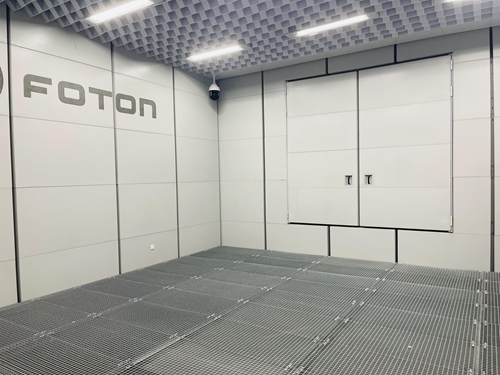
Reverberation Room
Its interior is constructed
with highly reflective hard surfaces to form a diffuse sound field. A built-in
loudspeaker array emits standardized broadband noise signals (e.g. pink noise)
to excite vibrations of test specimens and simulate real-world sound source
environments.
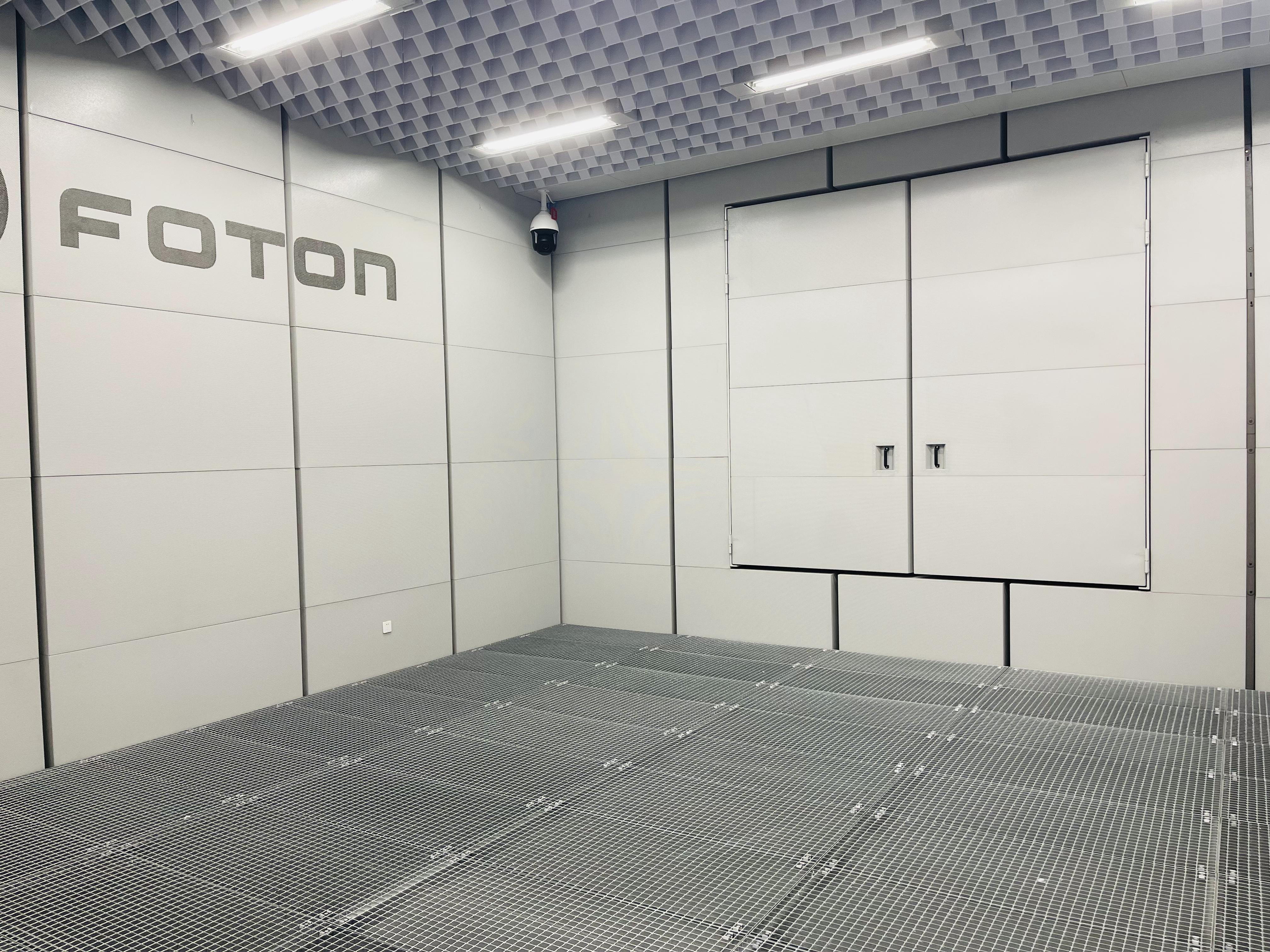
Anechoic Chamber
Contrary to the reverberation
room, its inner walls are lined with high-efficiency sound-absorbing structures
(typically wedges) to create a free-field environment. The background noise is
extremely low (generally required below 20 dB(A)), enabling precise measurement
of faint transmitted sound passing through the specimen from the reverberation
room.
Test Window / Mounting Opening
Set on the partition wall
between the two chambers with standard dimensions (commonly 1.2 m × 1.5 m).
Equipped with a precisely adjustable frame and heavy-duty sealing system
(hydraulic or pneumatic types widely adopted), it firmly mounts test specimens and
tightly seals edge gaps to avoid flanking sound leakage, ensuring test results
only reflect the inherent sound insulation performance of the specimen itself.
■ Key Test Equipment &
Procedures
Professional equipment is
required throughout testing:
- Sound Source System: Installed inside the
reverberation room, composed of power amplifiers and multiple loudspeakers
to generate a uniform and stable sound field across the target frequency
range (typically 125 Hz to 4000 Hz).
- Measurement System: Multiple microphones are arranged separately in the reverberation room (minimum 6 units) and anechoic chamber (minimum 3 units) to synchronously collect sound pressure level data at multiple points and calculate the average sound pressure level for each 1/3 octave band.
■ Standard Test Procedure
Mount the test specimen on the test window opening with full airtight sealing.
Activate the sound source inside the reverberation room to output standard noise signals.
Simultaneously measure the average sound pressure level in the reverberation room (L₁, representing incident sound energy) and the average sound pressure level in the anechoic chamber (L₂, representing transmitted sound energy).
The sound insulation test suite composed of a reverberation room and an anechoic chamber designed and built by Landtop Technology serves as the gold-standard facility for standardized, high-precision laboratory measurement of airborne sound insulation performance of building components. For years, it has provided core data support for clients’ architectural acoustic research, product development and standard formulation.


 Please leave your contact information, and we will get back to you as soon as possible!