






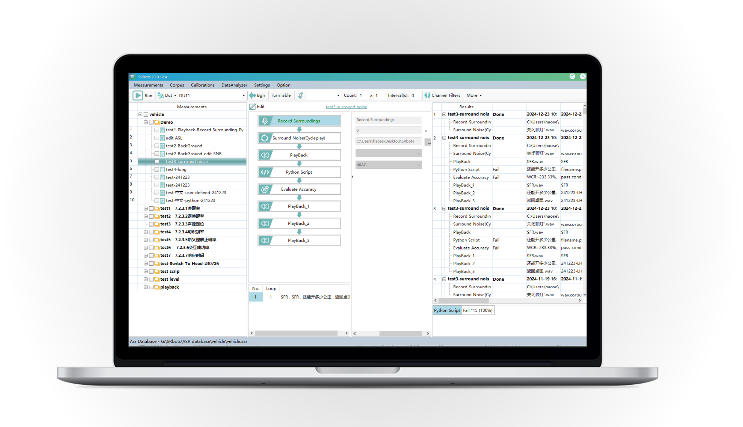
Automatic Speech Recognition (ASR) systems are widely used in human-computer interaction across various fields: intelligent assistants (in-vehicle systems, mobile devices), smart home devices (smart speakers, smart TVs), and more. The performance of ASR depends on linguistic factors (language, speaking speed, accent, dialect, volume, etc.) and environmental conditions (background noise, room reverberation, etc.). Testing ASR performance under various repeatable scenarios is particularly important, as it is a necessary condition for promoting ASR to achieve higher accuracy.
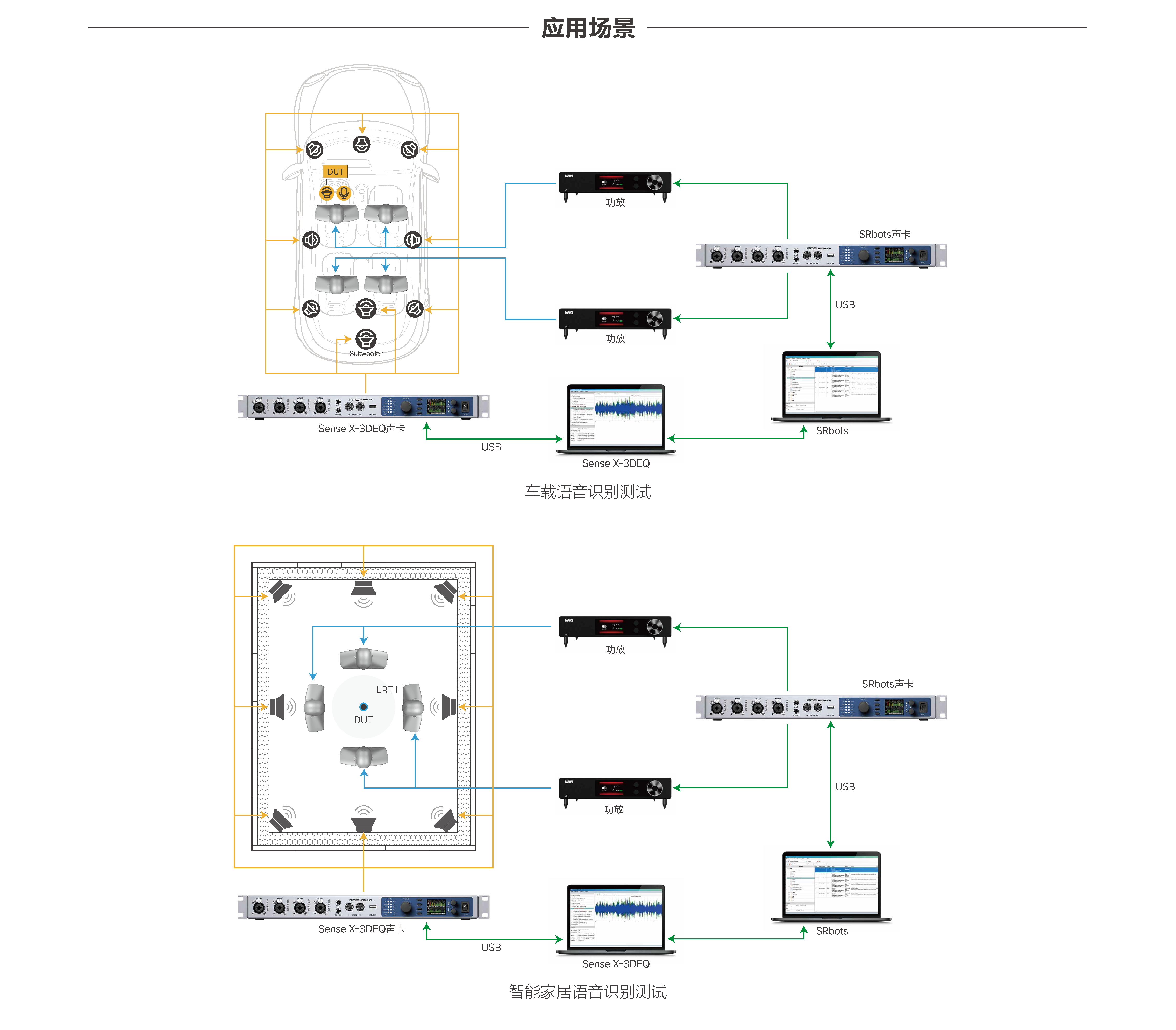
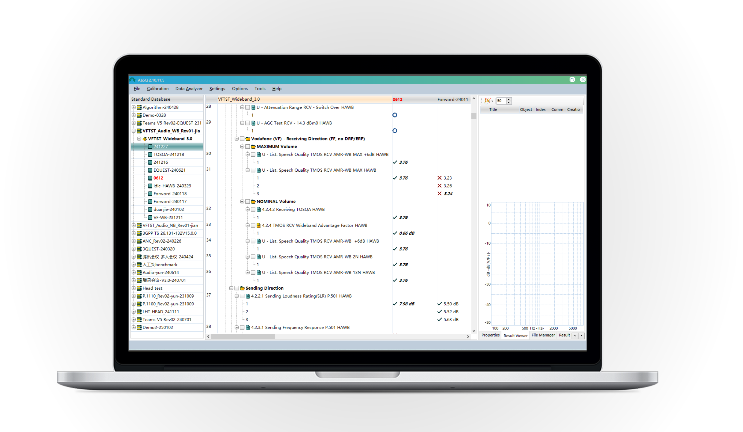
SRbots, as an automated platform for testing speech recognition systems, has emerged to address this need. It can automatically test ASR systems and their related devices. SRbots provides a modular setup process, enabling comprehensive and diverse testing under realistic and fully reproducible conditions. This makes the evaluation and optimization process of ASR systems more efficient, ensuring their performance and reliability in various practical application scenarios.
Key Features
■ Modular design allows users to freely combine test sequences with high flexibility.
■ Adopts RME UFX hardware, featuring high cost-effectiveness; it also supports all Windows ASIO-compatible sound cards.
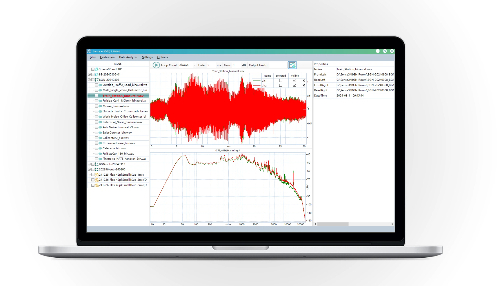
■ Default normalized voice output with an MRP sound pressure of -4.7 dBPa (in accordance with ITU-T P.56).
■ Supports simultaneous sound output from 12 artificial mouths.
■ Artificial mouths play voice with adjustable sound pressure, speaking speed, reverberation, filtering, and other parameters.
■ Remotely and synchronously invokes background noise (noise equalization standards: ETSI-EG 202396-1, TS103224; user-defined noise equalization), enabling more realistic simulation of actual scenarios.
■ Automatically adjusts the sound pressure of artificial mouth voice according to the Lombard effect formula based on the sound pressure of background noise.
■ Equipped with WCF interface and Python interface, supporting fully automated testing.
■ Can automatically control guide rail movement, robot movement, and turntable rotation, enabling automated testing at different distances and angles.



 Please leave your contact information, and we will get back to you as soon as possible!